How Does a Fiber Optic Laser Work? A Comprehensive Guide to Modern Laser Technology
What is a Fiber Optic Laser?
At its core, a fiber optic laser is a solid-state laser that utilizes an optical fiber as its active gain medium. Unlike traditional CO2 lasers that rely on gas mixtures, or older solid-state lasers using bulky crystals, fiber lasers use flexible glass fibers doped with rare-earth elements—most commonly ytterbium (Yb), erbium (Er), or neodymium (Nd).
These specific elements are chosen for their unique atomic structures, which provide the laser with its powerful light amplification properties, allowing it to generate a highly focused, intense, and continuous beam.
The Working Principle: From Light to Laser
The generation of a fiber laser beam involves a precise sequence of optical and quantum physical events, primarily driven by three components: the diode pump source, the doped fiber optic cable, and the laser cavity.
- The Pump Source: The process begins with laser diodes, which emit high-intensity, raw light.
- Coupling and Amplification: This raw light is coupled into the cladding of the fiber optic cable. As the light travels down the cable, it interacts with the rare-earth dopants (like ytterbium) in the fiber's core. The dopant atoms absorb the light energy and become "excited."
- Stimulated Emission: As these excited atoms return to their resting state, they release photons. These photons trigger a chain reaction, stimulating other atoms to release more photons of the exact same wavelength and direction.
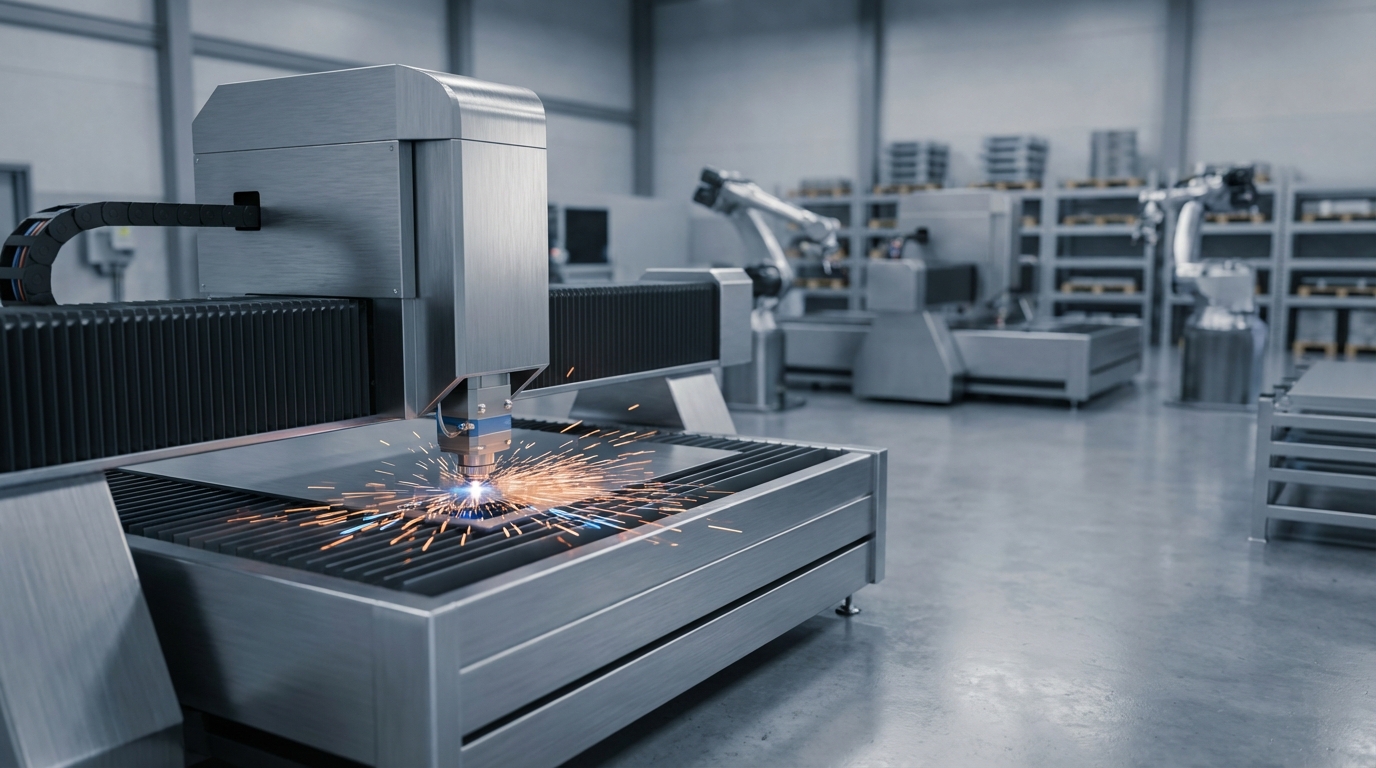
- The Waveguide Effect: The structure of the fiber optic cable acts as a waveguide. It traps the photons within the core using total internal reflection, creating a highly concentrated, coherent, and perfectly aligned laser beam that eventually exits the cutting head and is directed onto the workpiece.
Key Advantages of Fiber Optic Lasers
High Wall-Plug Efficiency and Precision
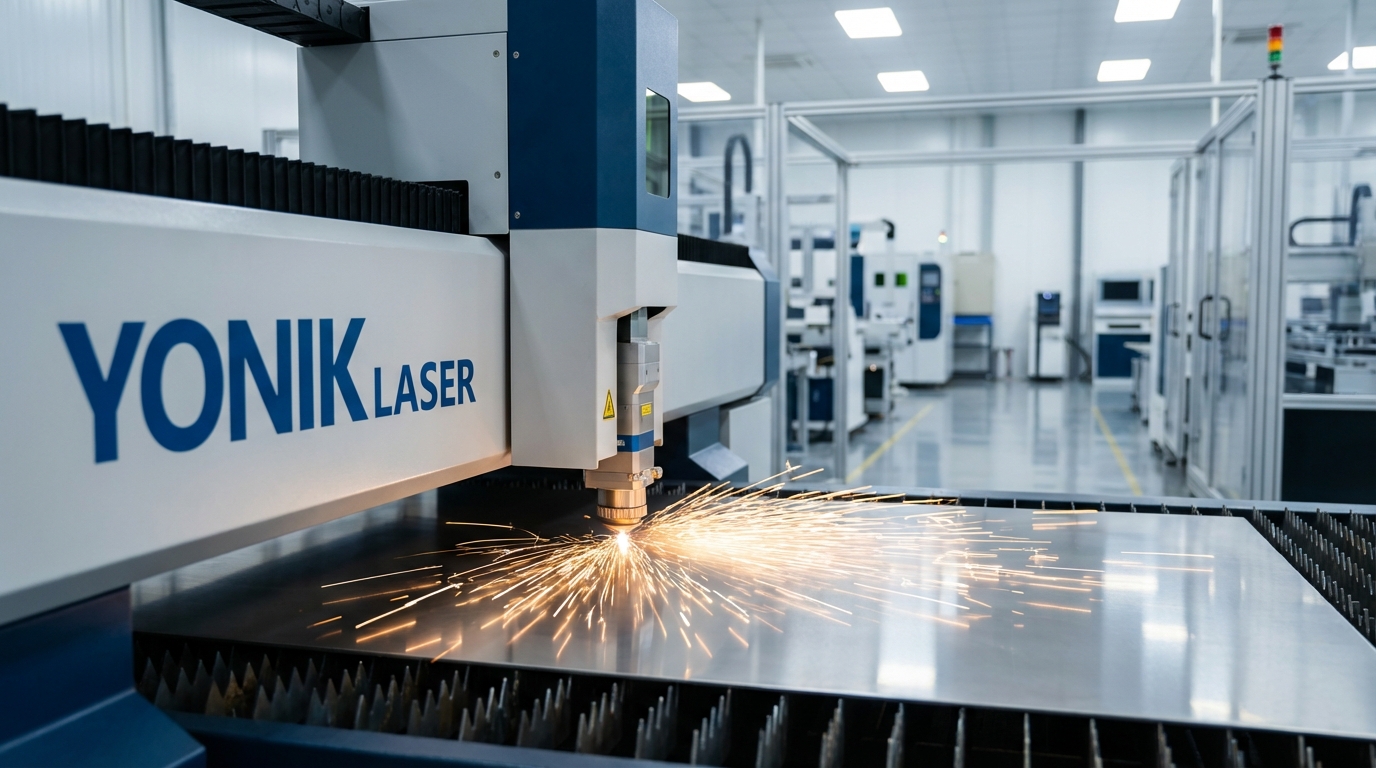
The standout advantage of fiber optic technology is its remarkable energy conversion rate. Fiber lasers boast a wall-plug efficiency of over 30%, which is significantly higher than the 10% typically seen in traditional gas lasers. This drastically reduces electricity consumption and operating costs. Furthermore, the extremely small focal spot diameter of the fiber laser ensures pinpoint precision, allowing for clean, narrow kerfs and intricate geometric cuts without thermal distortion.
Unmatched Versatility in Metal Processing
While some lasers struggle with reflective materials, fiber optic lasers excel across a broad spectrum of metals. They effortlessly slice through mild steel, stainless steel, aluminum alloys, brass, and copper. This material flexibility makes them an invaluable asset across various sectors, from automotive and aerospace to heavy machinery and structural engineering.
Minimal Maintenance and High Longevity
Because fiber lasers are entirely solid-state and the light is generated and delivered within a sealed optical fiber, there are no internal mirrors to align and no laser gases to replenish. This robust design eliminates the complex maintenance routines associated with older technologies. With high-quality diode modules, a fiber laser source can consistently operate for up to 100,000 hours before requiring significant service, minimizing production downtime.
Primary Industrial Applications
The unique properties of fiber optic lasers allow them to dominate several key manufacturing processes:
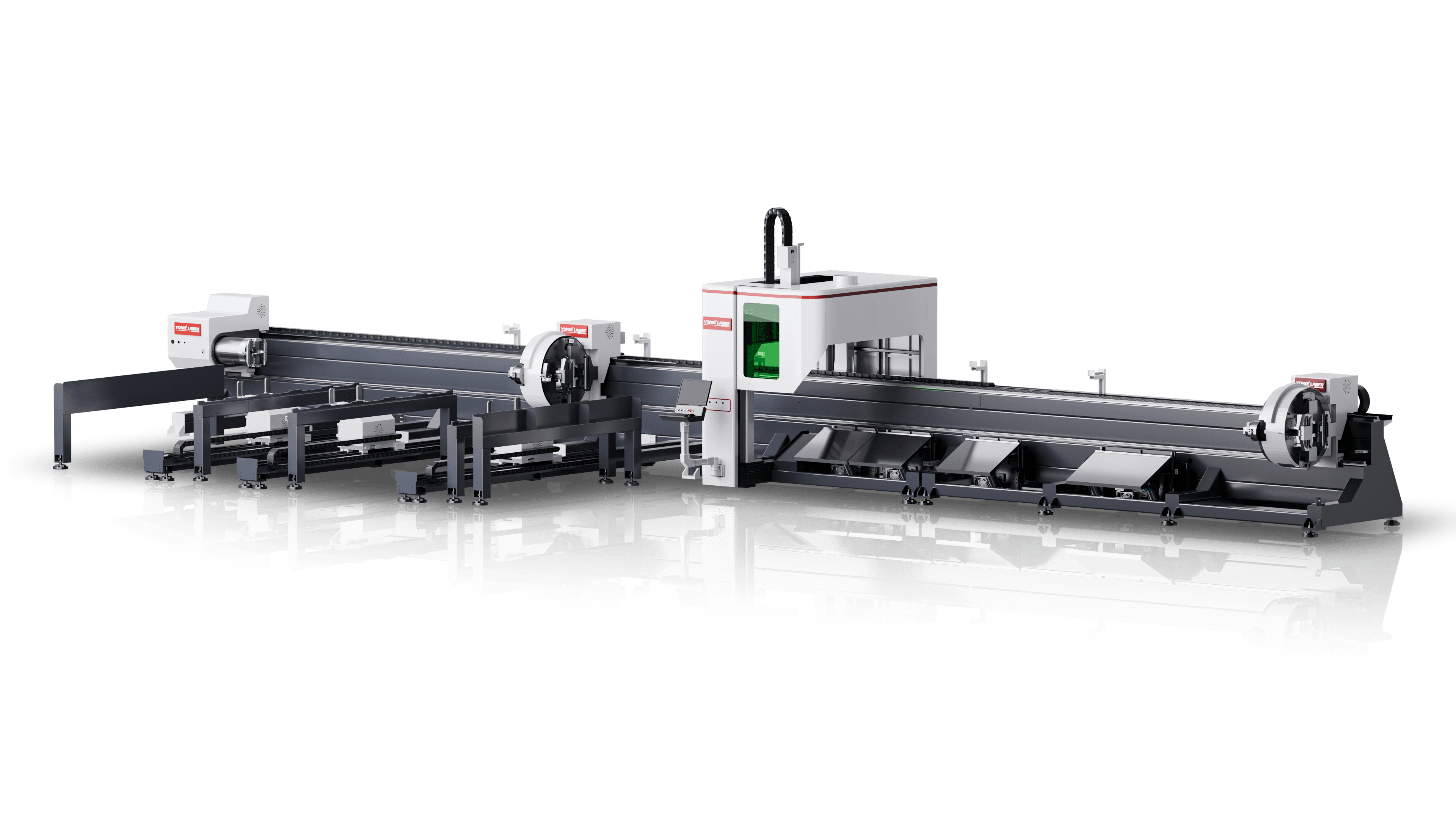
- Sheet Metal and Tube Cutting: This is where fiber lasers truly shine. High-power systems can rapidly process thick metal plates and complex tube profiles (round, square, and specialized shapes) with clean edges that often require no secondary processing.
- Industrial Marking and Traceability: Low-power fiber lasers are used to permanently engrave serial numbers, QR codes, and logos onto metal components, ensuring lifetime traceability in harsh environments.
- Precision and Medical Manufacturing: The pinpoint accuracy of the beam allows for the micro-cutting of thin metals used in medical devices, electronics, and precision instruments where tolerances are measured in microns.
Elevate Your Production Capabilities with YONIK LASER
Fiber optic technology has transitioned from a futuristic concept to an indispensable backbone of industrial manufacturing. Its ability to balance sheer cutting power with meticulous precision makes it the clear choice for modern fabrication shops.
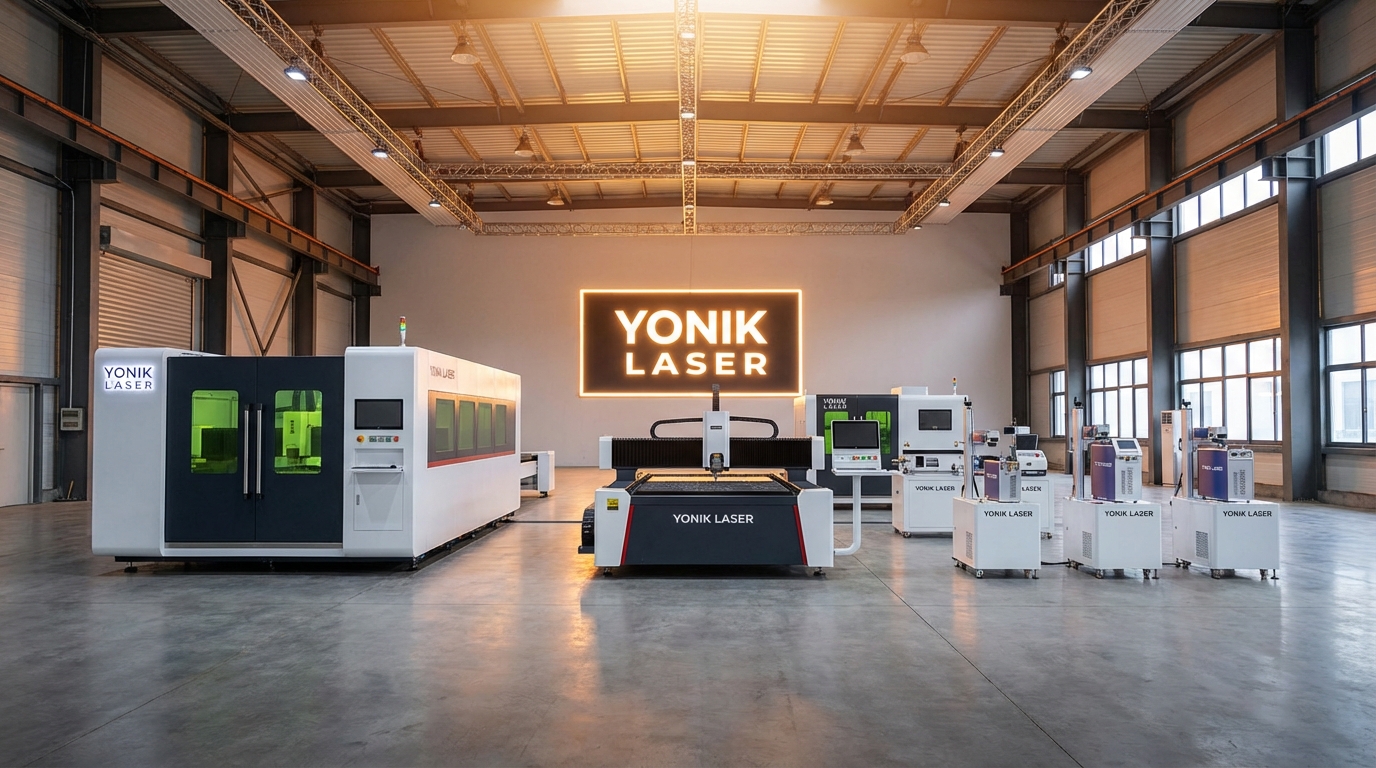
At YONIK LASER, we specialize in the R&D and manufacturing of state-of-the-art industrial laser solutions. From high-power sheet metal fiber laser cutting machines to advanced CNC tube laser cutters and handheld welding systems, our equipment is engineered to maximize your throughput and lower your cost per part.
Ready to upgrade your fabrication workflow? Contact the YONIK LASER team today to explore our machinery line-up and find the perfect fiber laser solution tailored to your production needs.